COACHING LAB
Coach the flow of force—not just the shape—through landmark positions.
Observe and refine the relationships among the support foot, pelvis, rib cage, and head in real time.


An advanced, intensive certification for movement professionals—building a shared language of rotation that applies across sport, fitness, conditioning, healthcare, and wellness.
Please check the official registration page for the latest dates, venues, and availability.
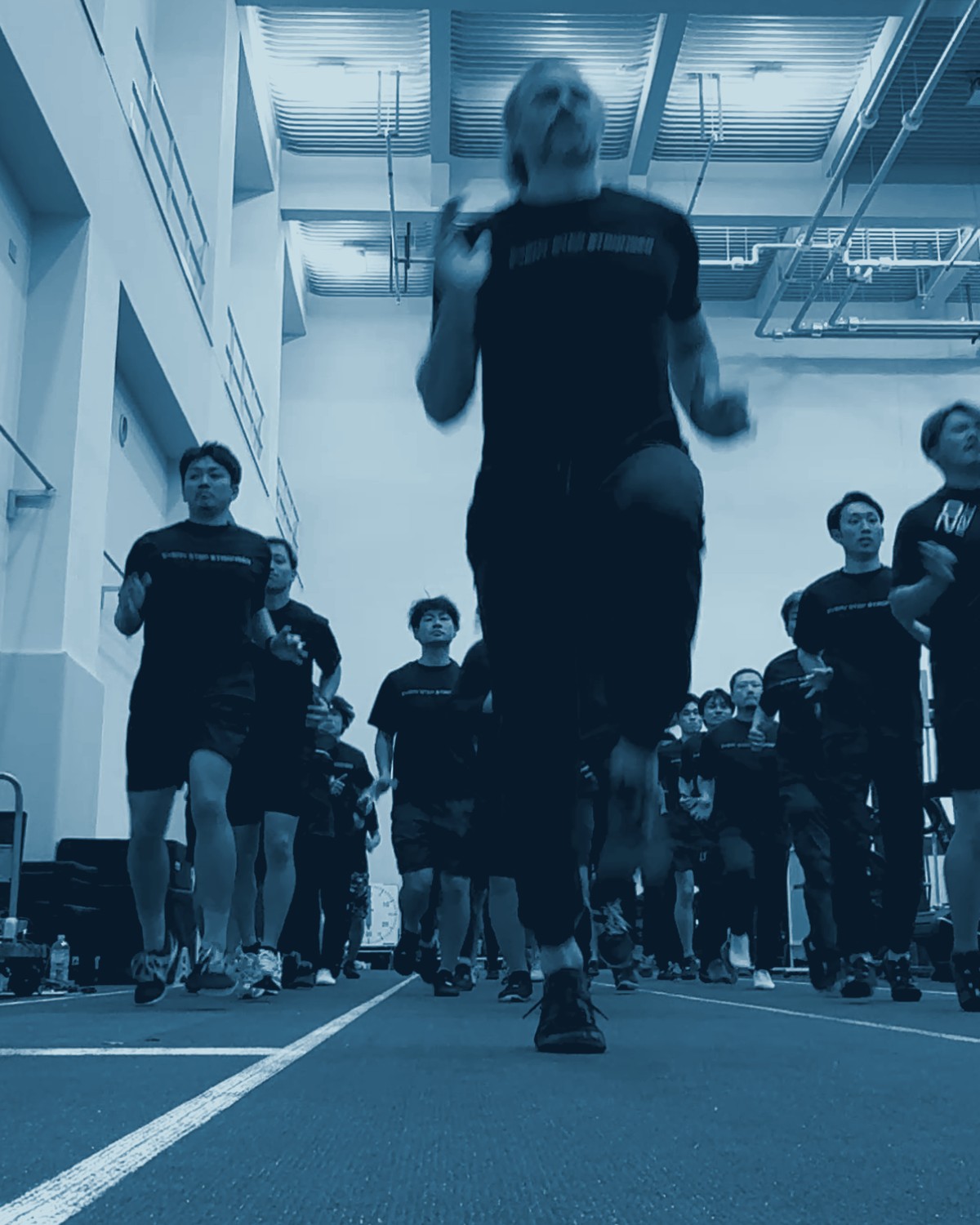
Watch WMQ practice, coaching, and rotational training unfold directly on this page. Full-screen playback lets you experience the learning environment alongside the curriculum.
Open the Film in a New Window ↗Demonstration, group practice, individual feedback, and tool-based observation flow continuously through the learning experience.
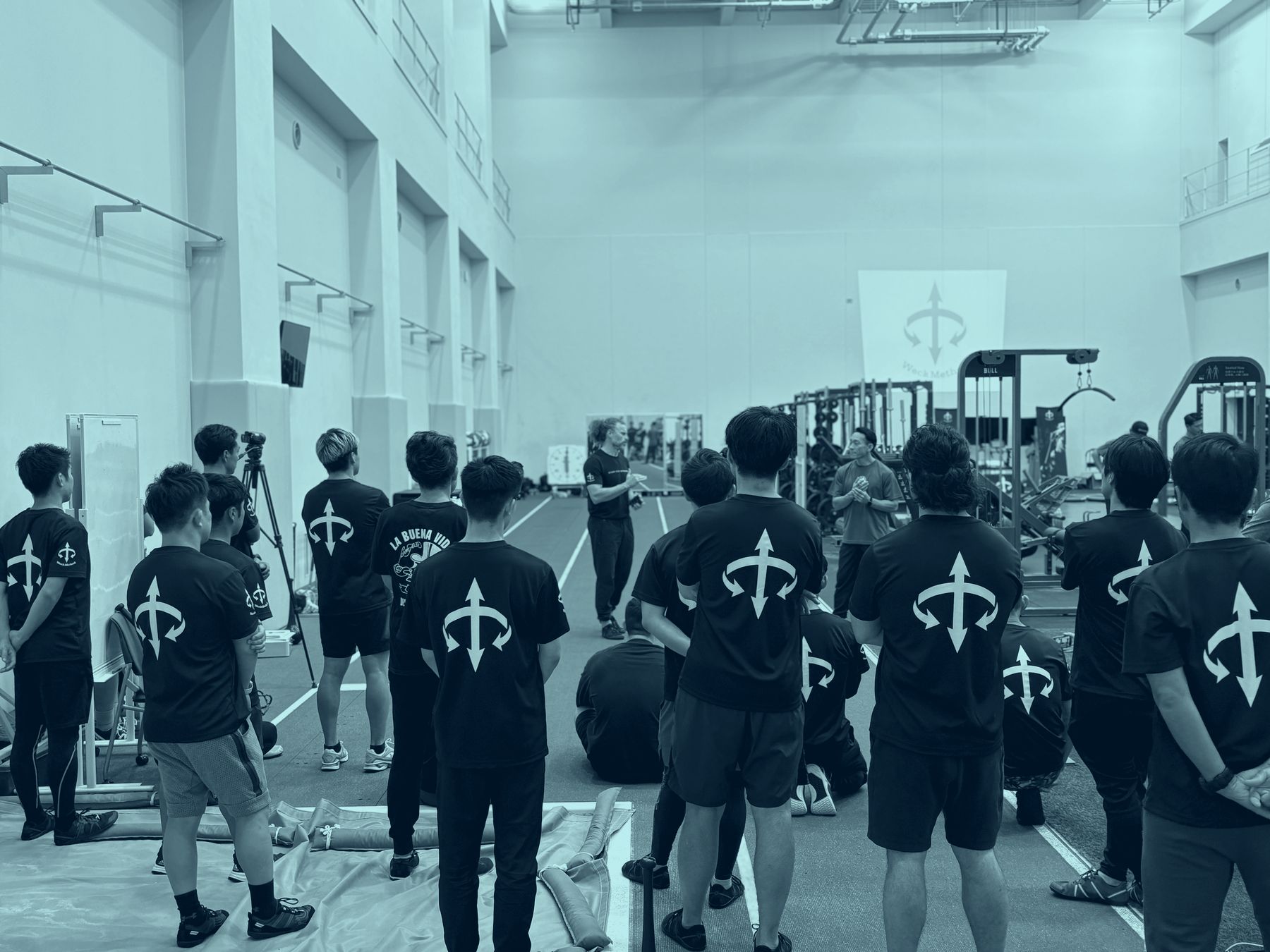
WMQ does not teach a larger catalogue of exercises. It teaches the principles that organize movement.
When people walk, run, throw, strike, push, or pull, they integrate spinal side-bending and rotation with gravity, ground reaction force, and steering through the limbs. WMQ teaches you to read these actions not as isolated muscles or fixed positions, but as whole-body relationships among force flow, torsion, timing, and the support surface. Participants learn the principles through their own movement, then translate that understanding into observation、cueing、demonstration、tool selection、programming—and apply it with confidence in practice.
The course goals in the manual, translated into practical value after completion.
Understand through the body how gravity, ground reaction force, and rotation support efficient force absorption and expression.
Move beyond more explanation. Use sound, vision, touch, and tool feedback to create learning.
Prepare direction, rotation, and tension before movement to turn vague actions into repeatable patterns.
Reframe bodyweight, dumbbell, kettlebell, and plyometric training within a rotational context that transfers to sport.
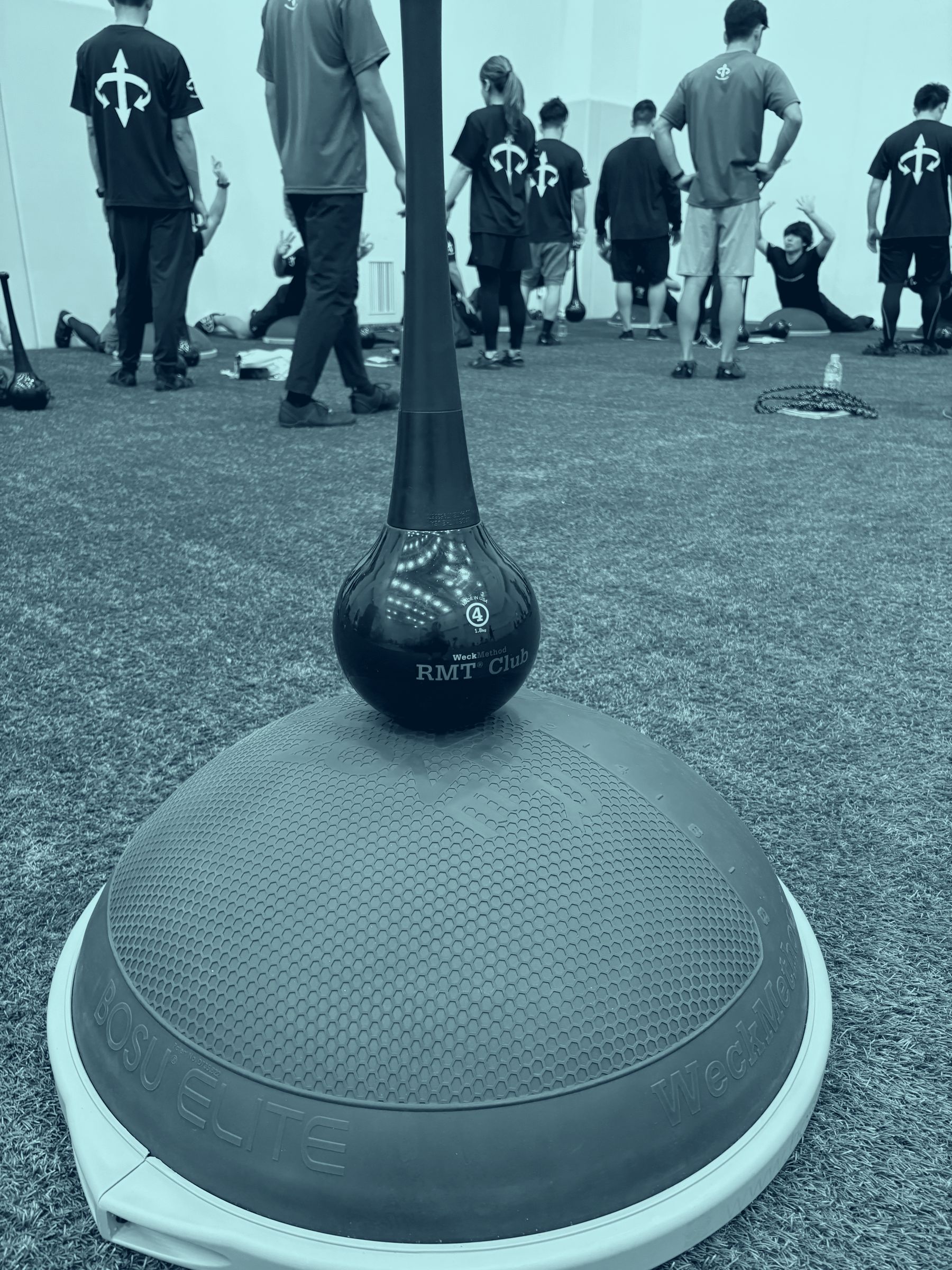
Use the RMT® Club, BOSU® Elite, RMT® Rope, and ProPulse® not as equipment alone, but as teachers of neurology and mechanics.
Train transitions across all planes, using proximal control to create distal freedom.
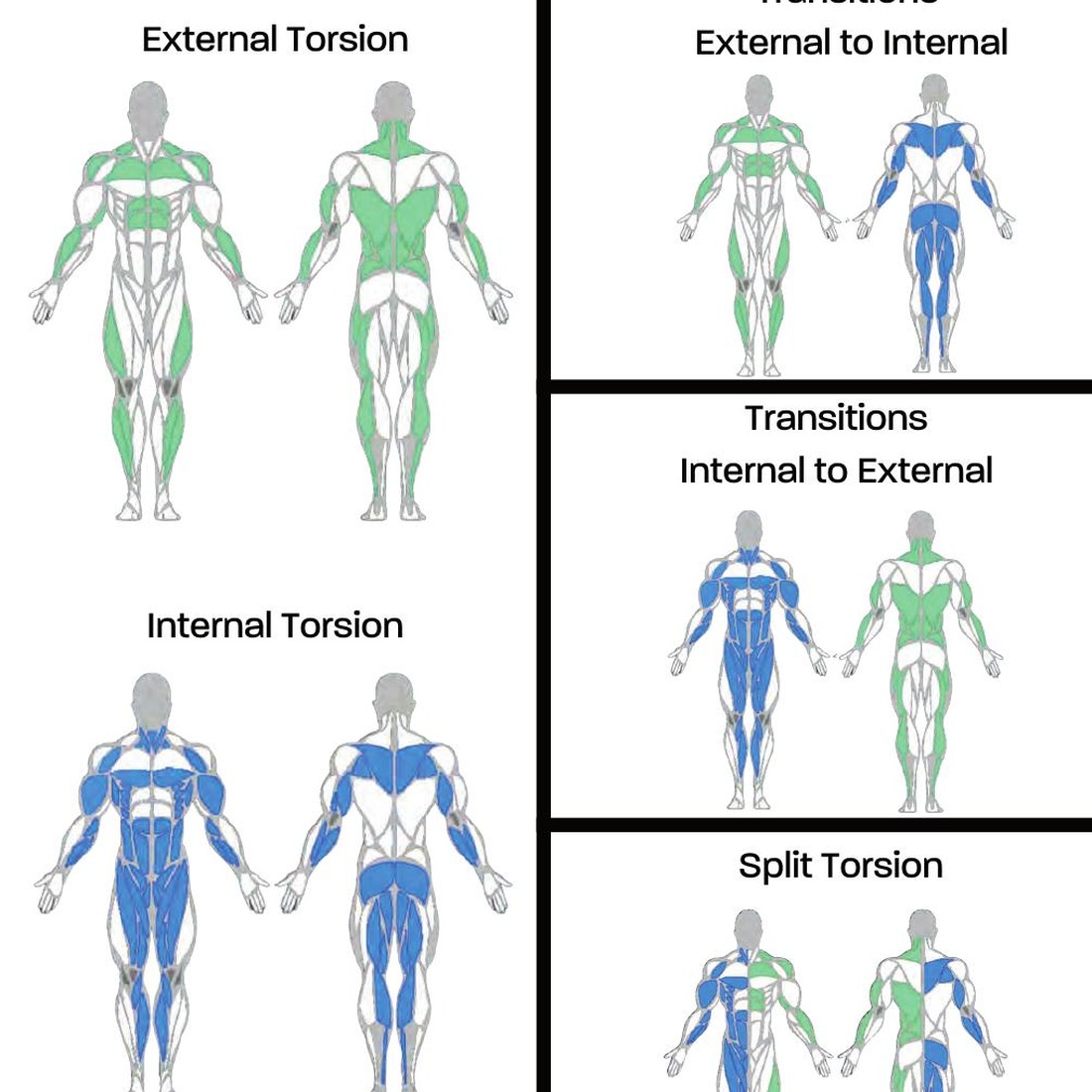
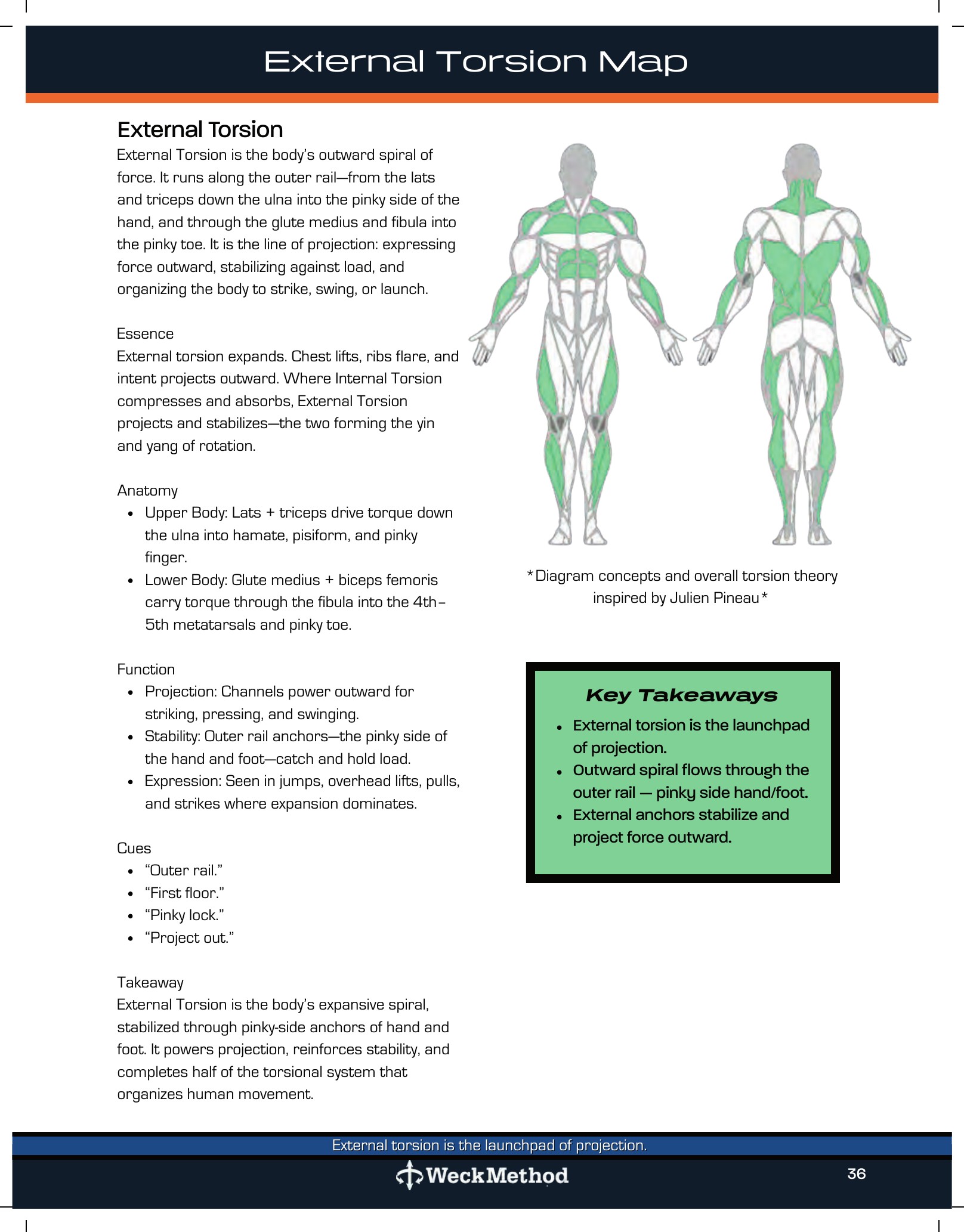
Visualize internal, external, and split torsion for assessment, correction, and sport application.
Integrate curiosity, inclusion, and biomechanical precision into language and demonstrations people can understand.
WMQ is not a course in memorizing isolated drills. It is a movement system for organizing the body from center to extremity—and from extremity back to center.
Understand spinal side-bending and rotation as an engine for producing, transmitting, and redirecting force in human locomotion.
Create compression and shortening on one side with lengthening on the other, developing elasticity and direction beyond rigid bracing.
Connect left and right coils into a continuous spiral and transfer rotational rhythm into stepping, swinging, and striking.
Maintain rotational literacy in bilateral strength work and integrate it into tension, strength, and power under load.
Study each exercise through spinal side-bending and rotation, external and internal torsion, fascial continuity, and the way force received from the support surface transfers through the limbs. Learn to read whole-body timing and force flow—not only local movement—and convert that understanding into coaching.
 EXERCISE
 TORSION MAP
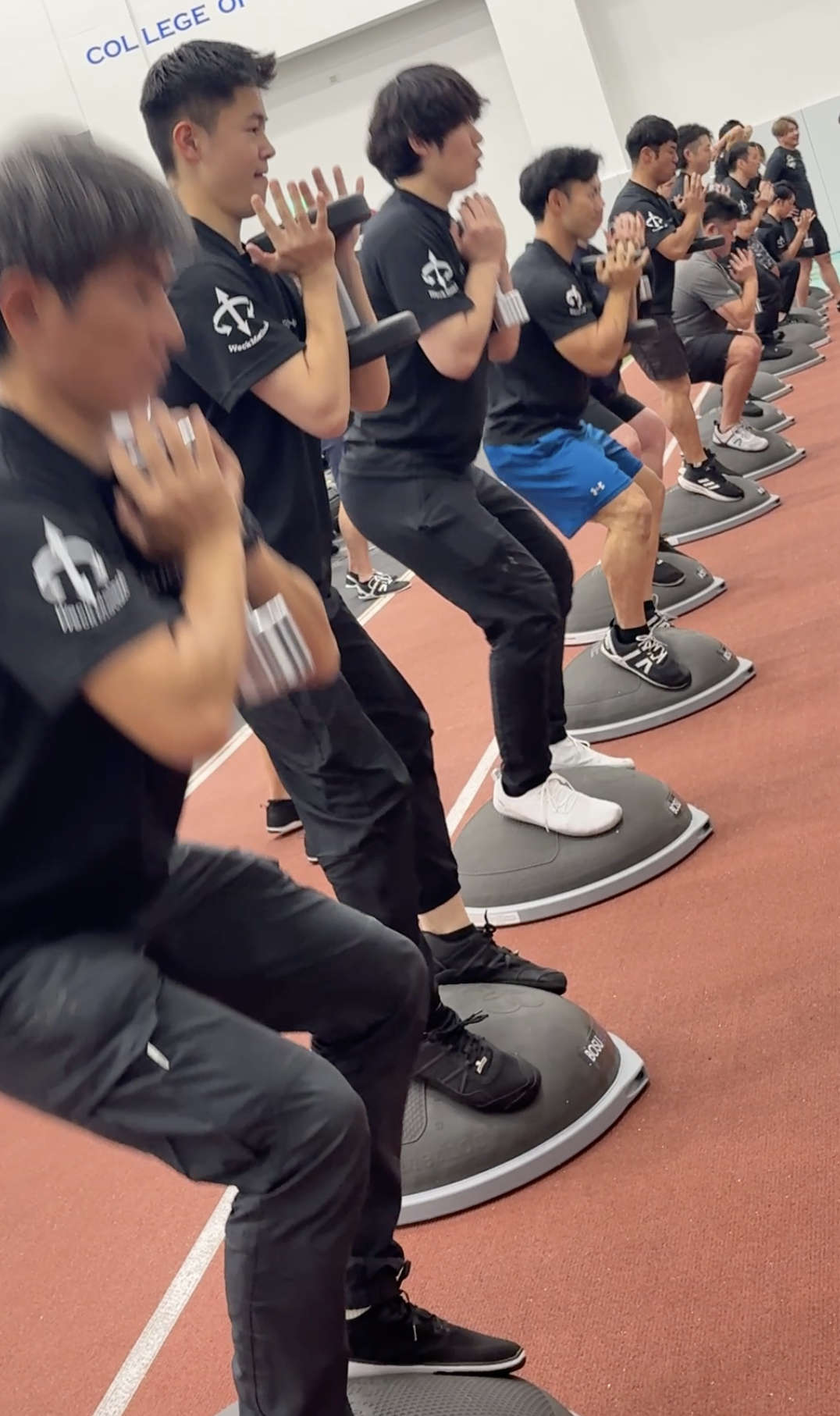
Changing the support surface highlights external and internal rotational intent from the foot into the trunk. Coach internal lines of tension rather than fixed posture.
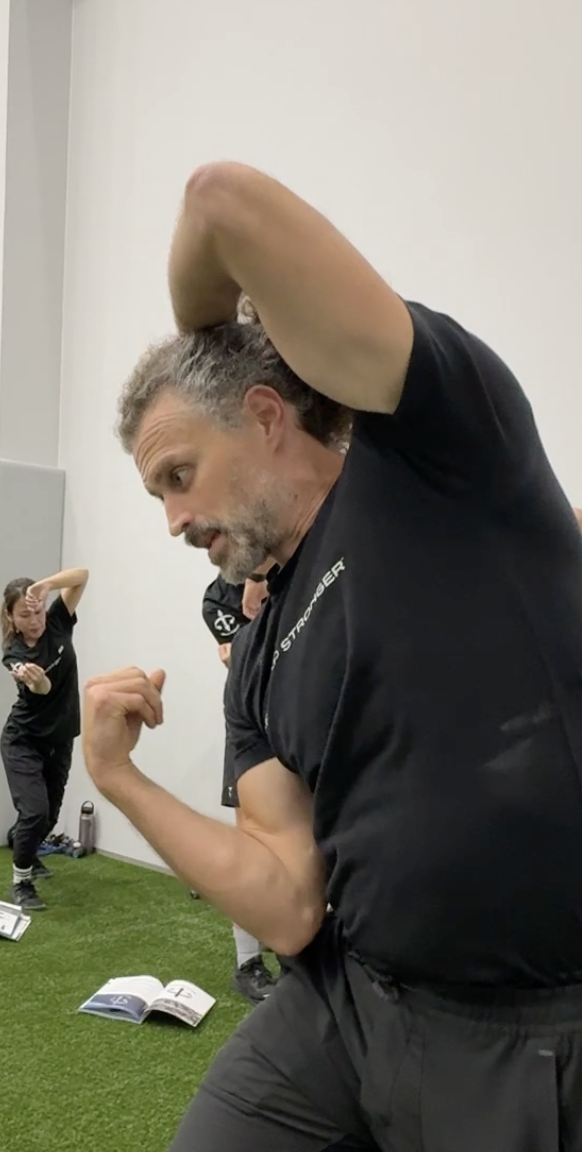 MOVEMENT
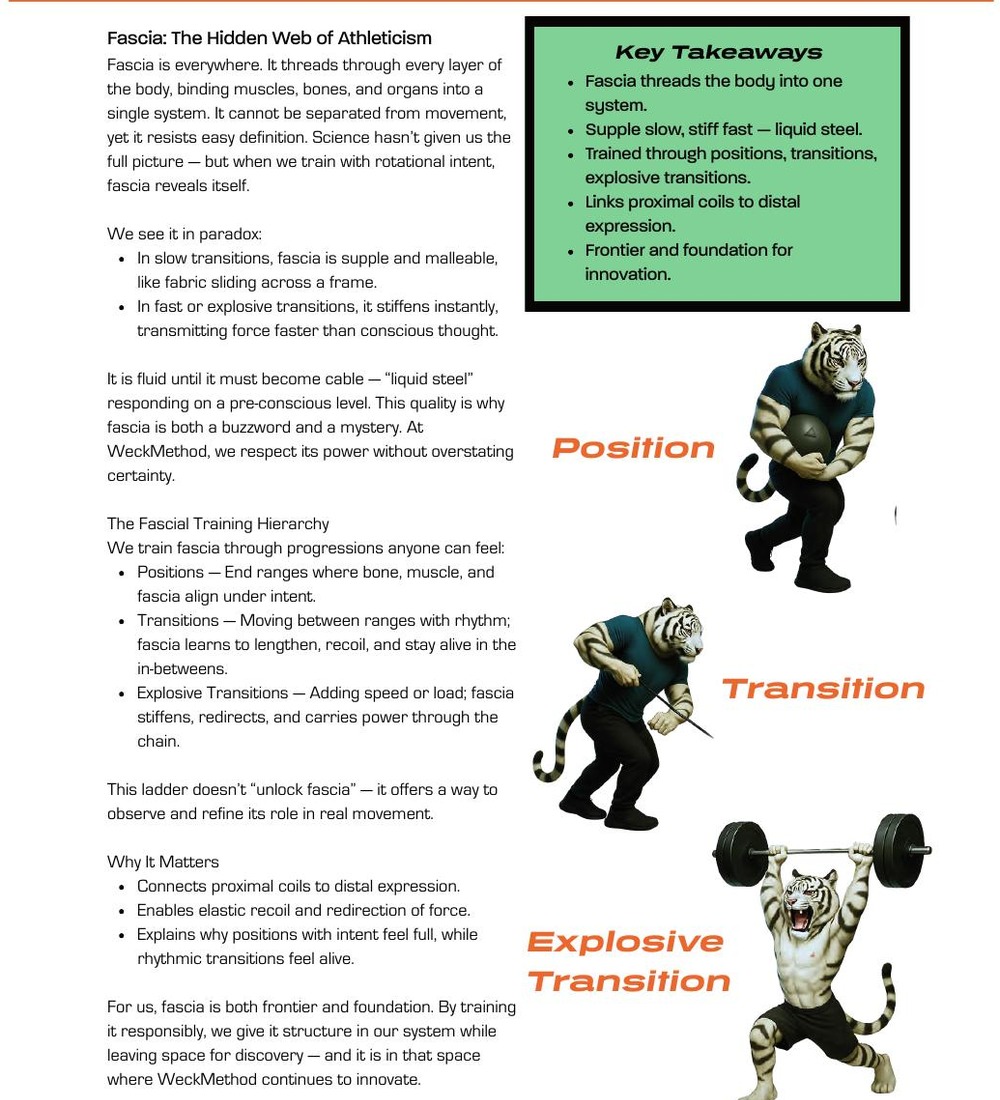 FASCIA
Through positions, transitions, and explosive transitions, experience how fascia changes length, rebounds, and transfers force.
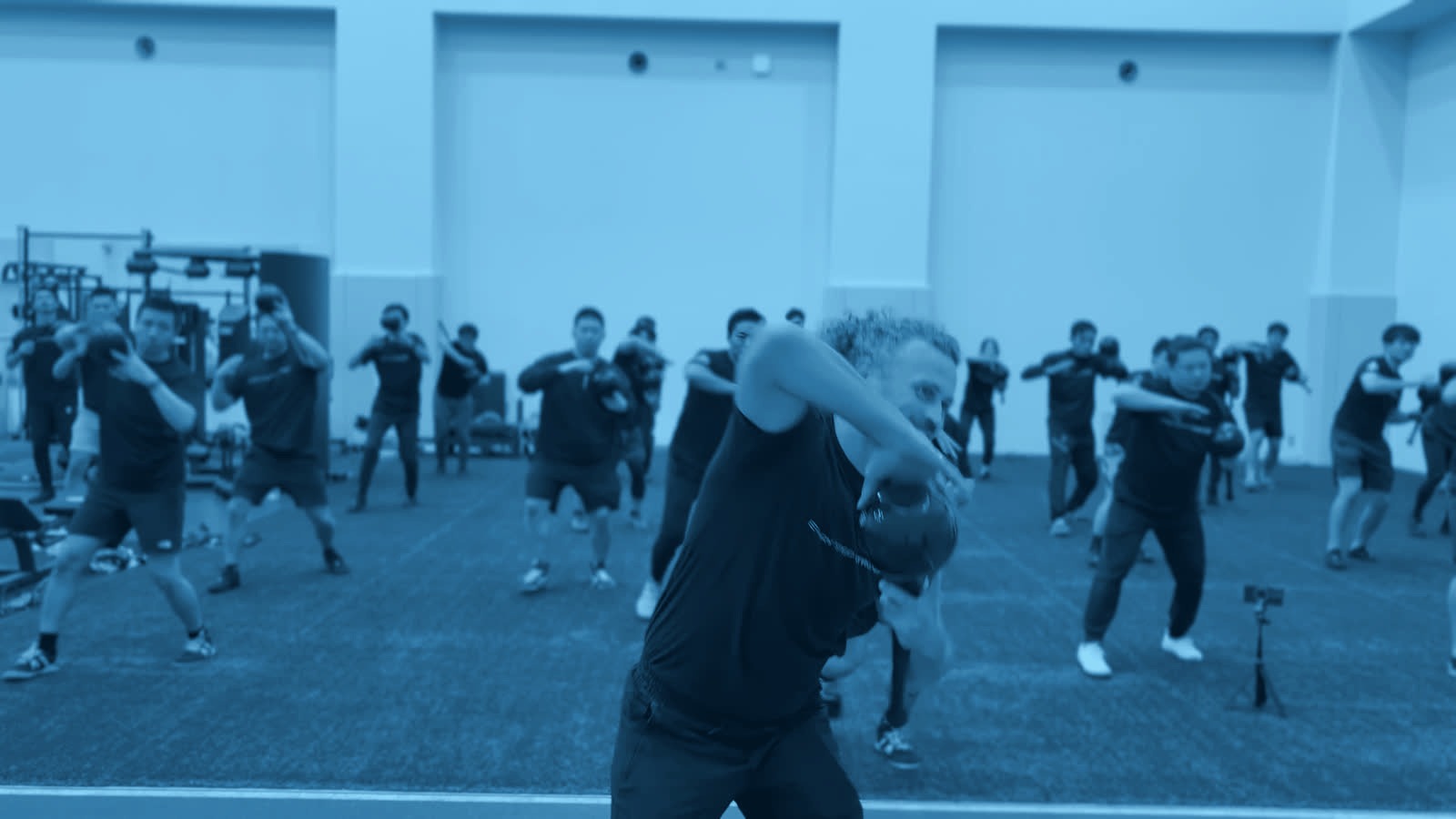 TOOL FEEDBACK
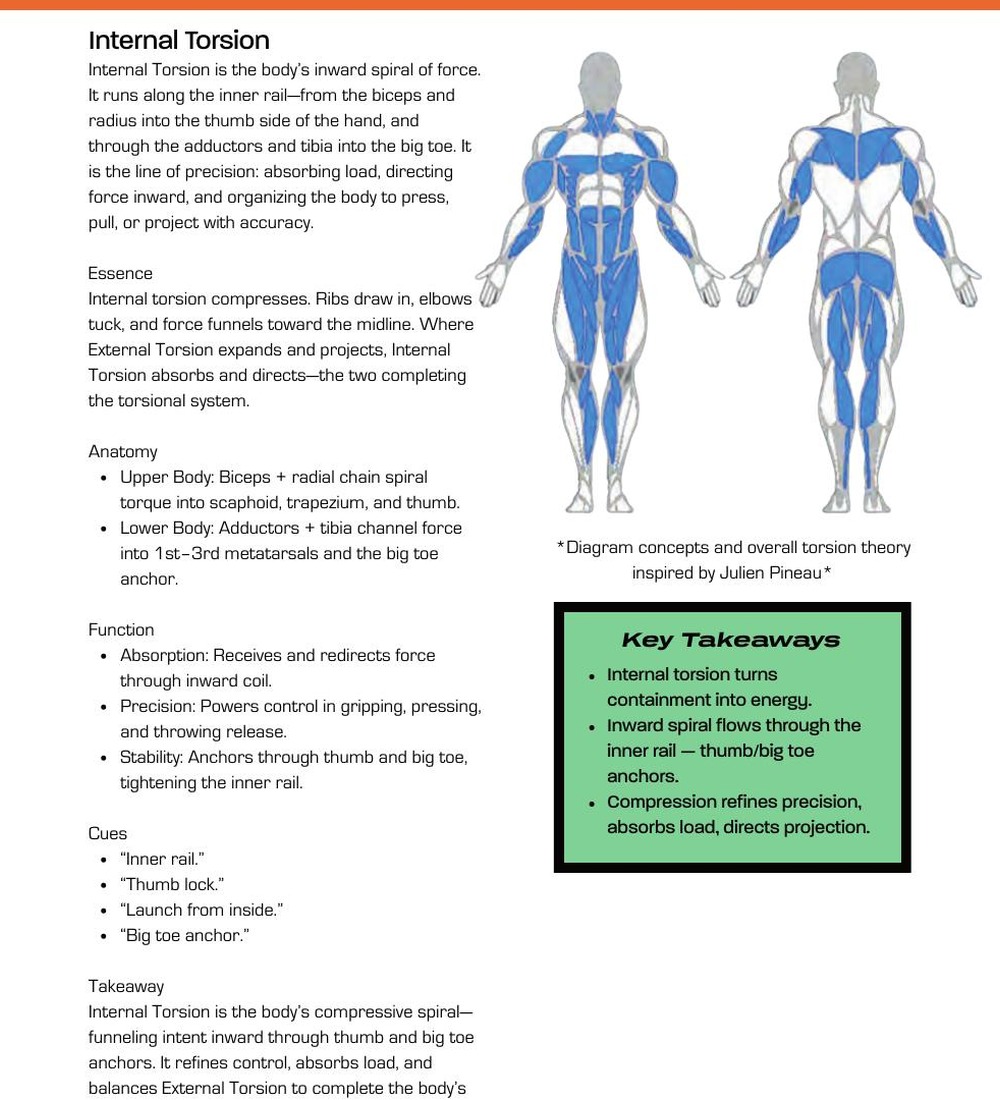 ANATOMY
Use feedback from inertia and deceleration to clarify how proximal rotation sequences toward the extremities. The tool makes the intent visible.
The 180+ page manual organizes the principles of the body, tool practice, coaching, and educational delivery into one integrated system.
Gravity / Orientation / Centerline / Substantial: foundations for receiving, organizing, and expressing force.
Develop tissue elasticity and force transmission through Position → Transition → Explosive Transition.
Use Lead-Leg Coil, Trailing-Leg Coil, and Bilateral Core as shared reference points for movement assessment.
Observe and coach External, Internal, and Split Torsion—and the transitions among them—as whole-body lines.
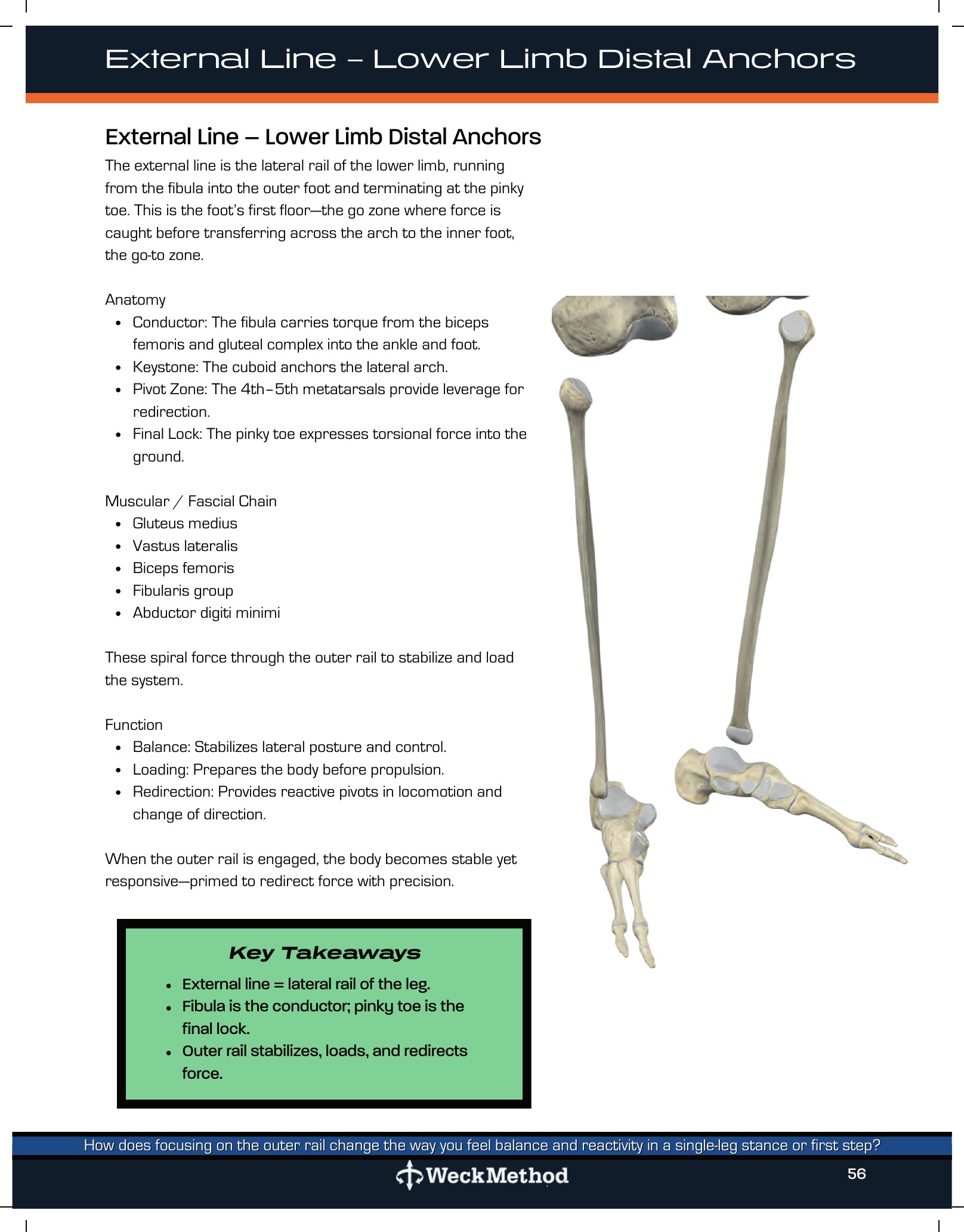
Use the elbows, knees, hands, feet, and head as distal anchors to guide proximal rotation.
Use quality repetition, self-observation, and immediate feedback to help participants find movement solutions for themselves.
Balance rotational elements with bilateral training and integrate them naturally into existing S&C programs and classes.
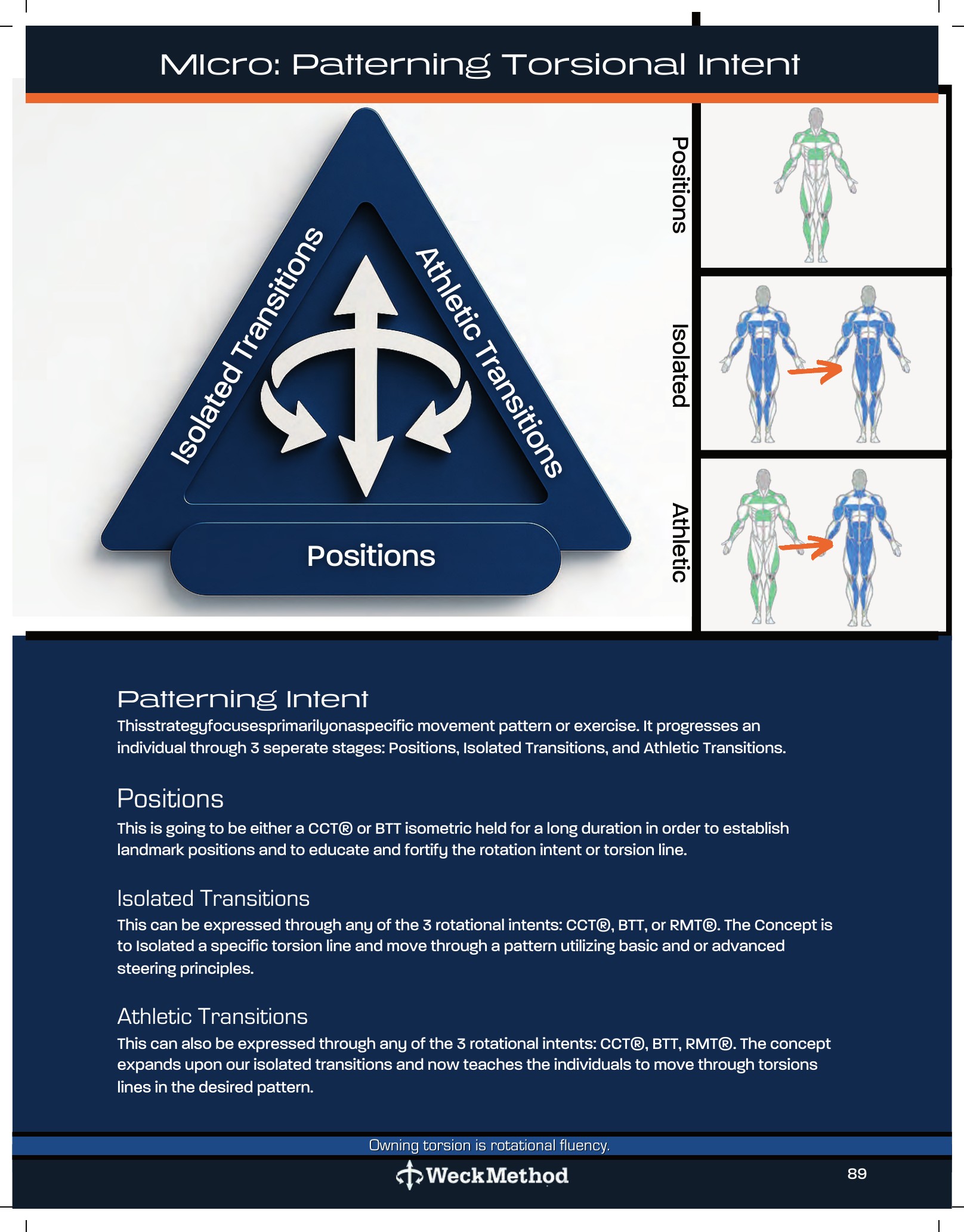
Build an explainable design process: Goal → Pattern → Proximal Intent → Torsion → Steering → Exercise Selection.
Apply bands, RopeFlow, ProPulse®, RMT® Club, BOSU® Elite, and SoleSteps® according to purpose.
Reduce excessive explanation and create learning through observation, demonstration, and environment. Advanced participants may progress toward the Master Coach pathway.
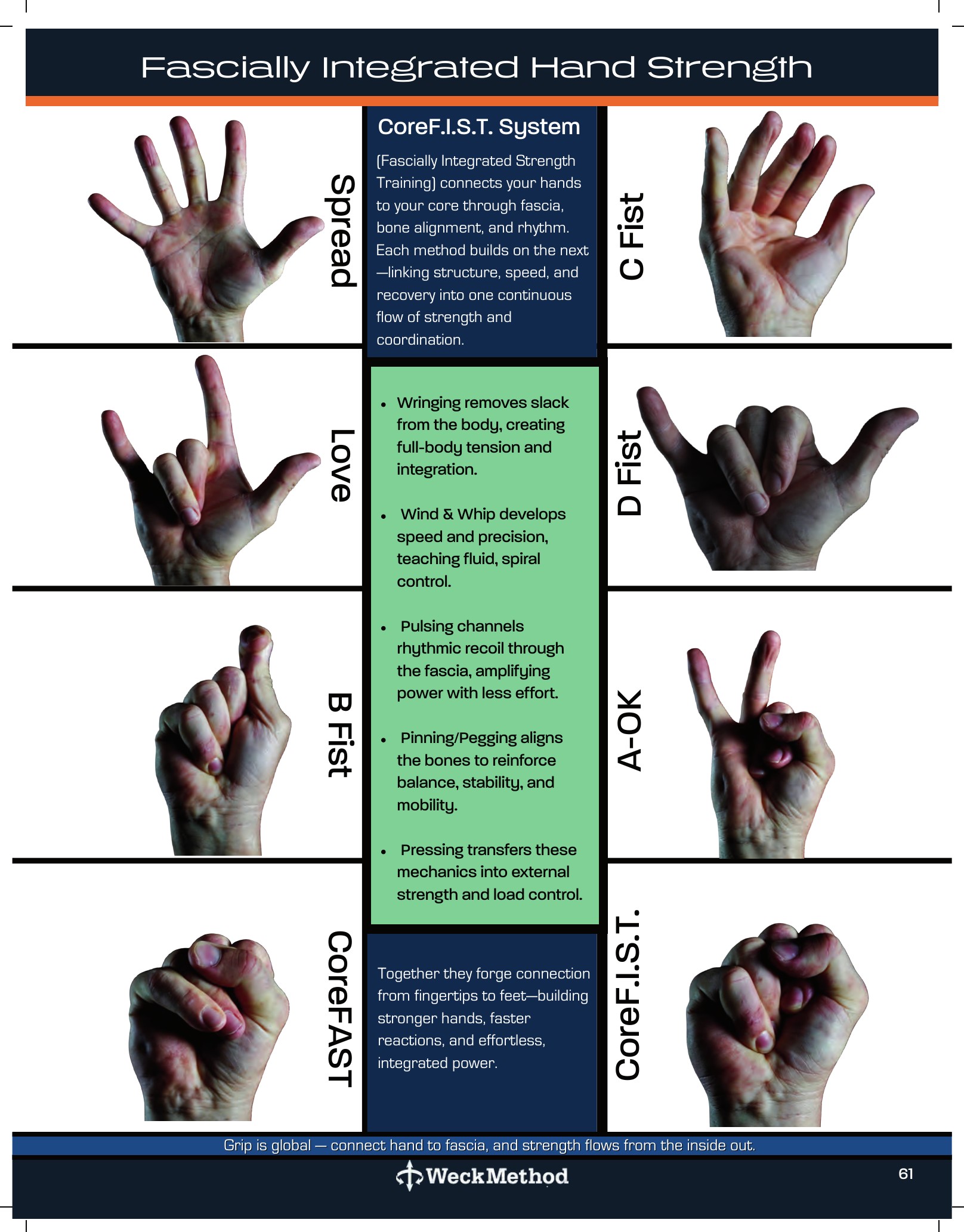
From anatomical torsion lines and distal anchors to fascial integration, movement-intent design, and CCT/BTT exercise progressions, these manual pages introduce the technical content of WMQ. WeckMethod uses biomechanics and anatomy to turn complex human movement into something that can be observed, explained, and coached. During the live course, anatomy and exercise physiology content may be summarized according to the group and the flow of instruction.The purpose is not simply to accumulate information. The material is organized as a foundation for reasoning through movement principles and delivering repeatable coaching in practice.
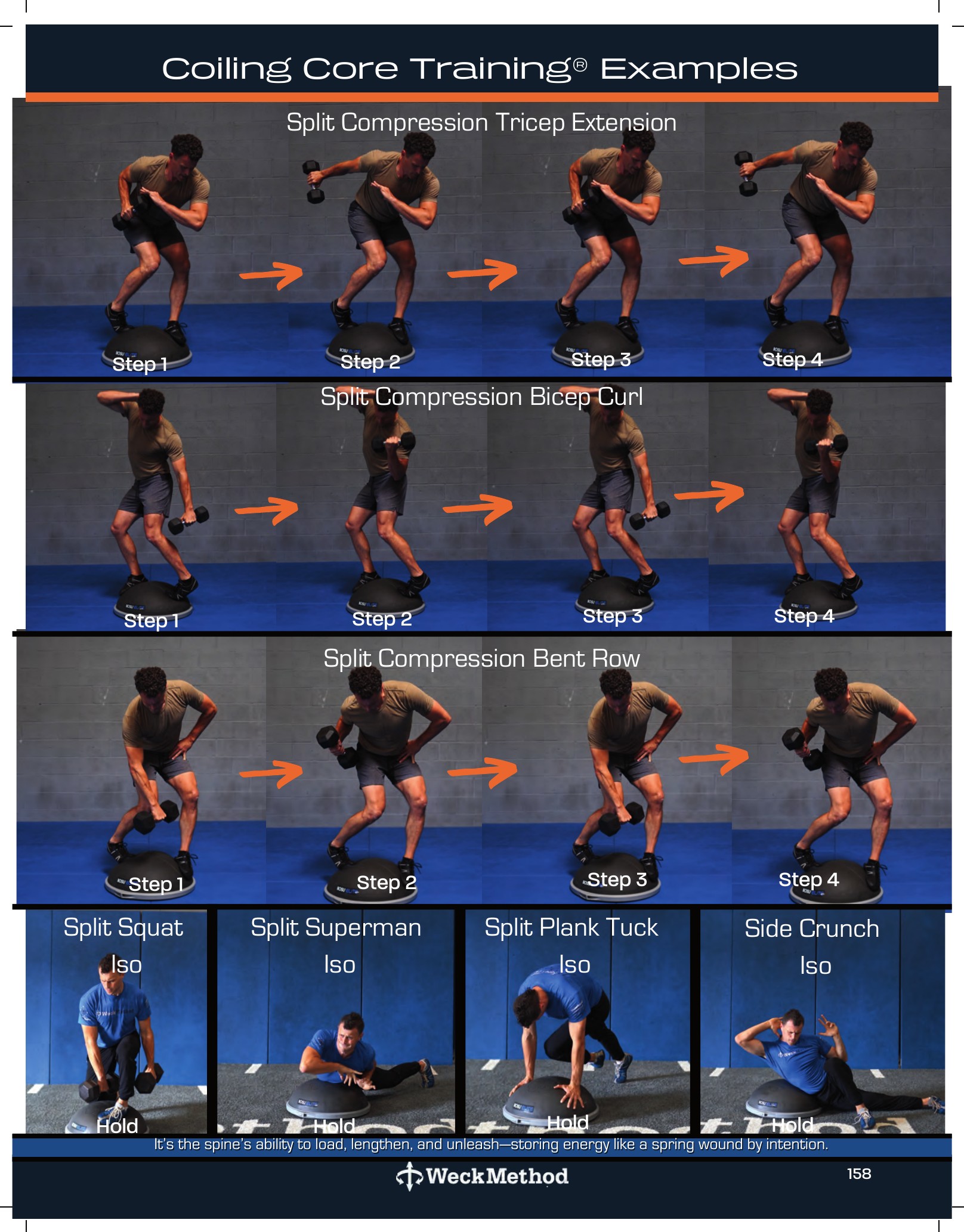
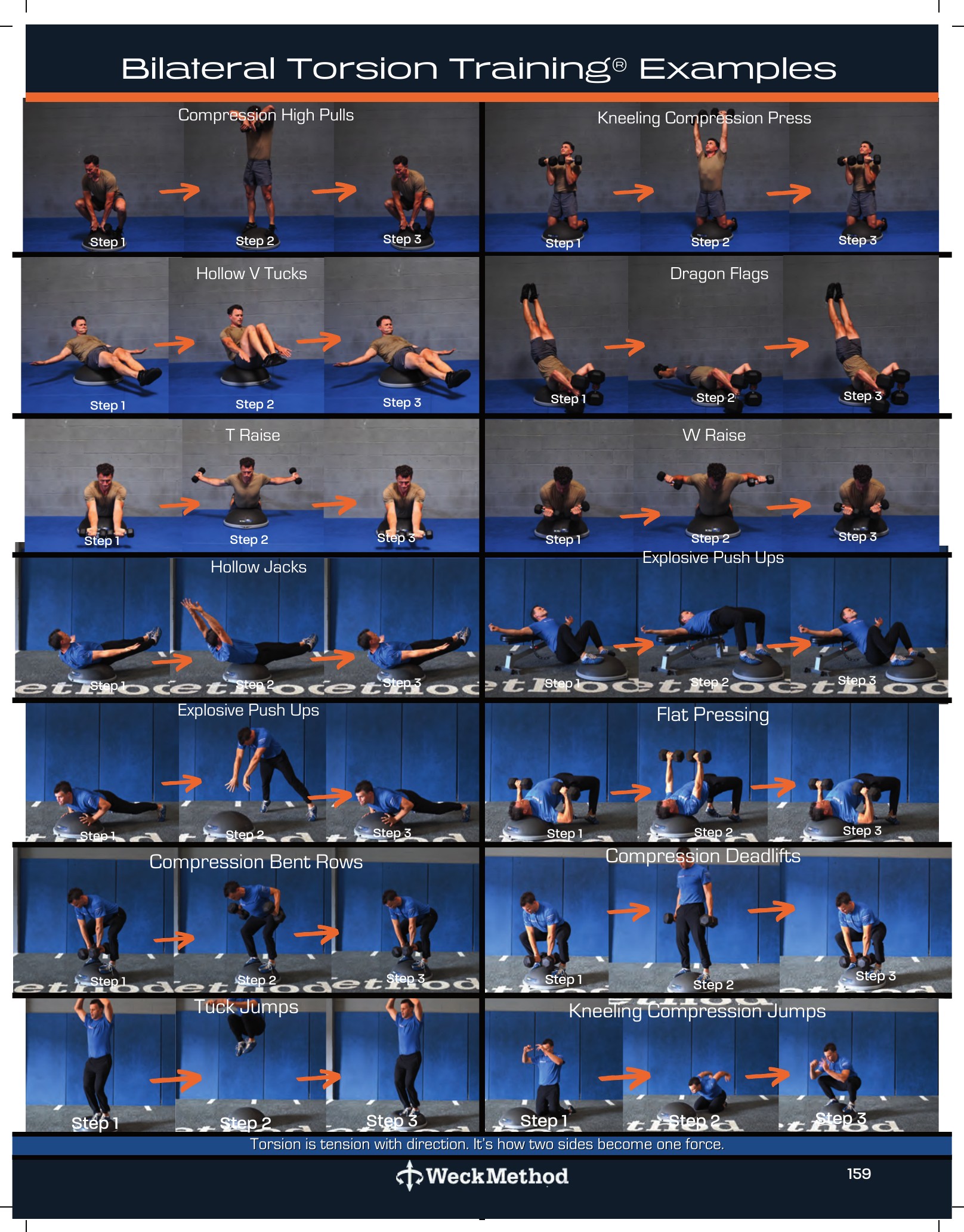
The WMQ manual provided during the course is in Japanese.
Each tool asks the body a different question, turning rotation, compression, deceleration, and rhythm into experiences that words alone cannot create.
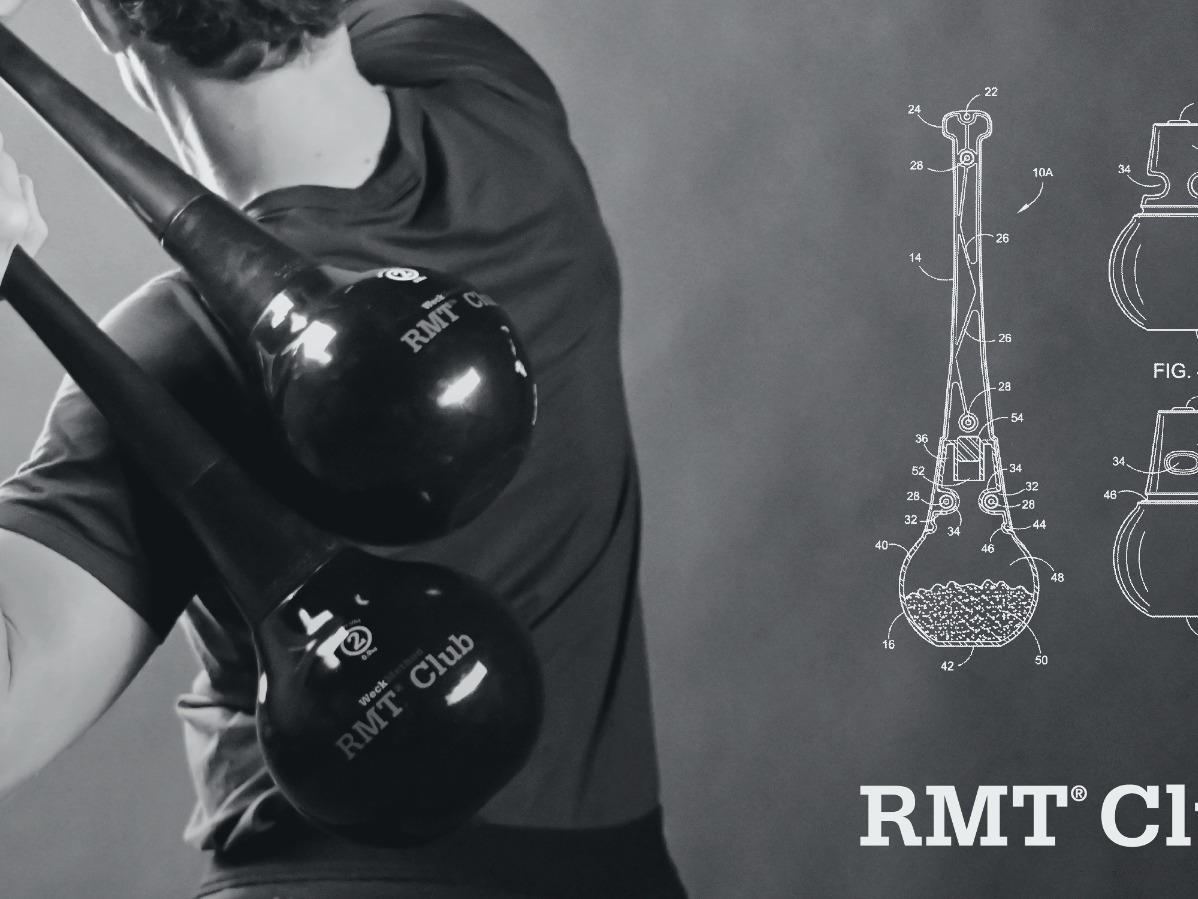
Develop rotational power, timing, and three-dimensional tool control through fluid swings and sudden deceleration.
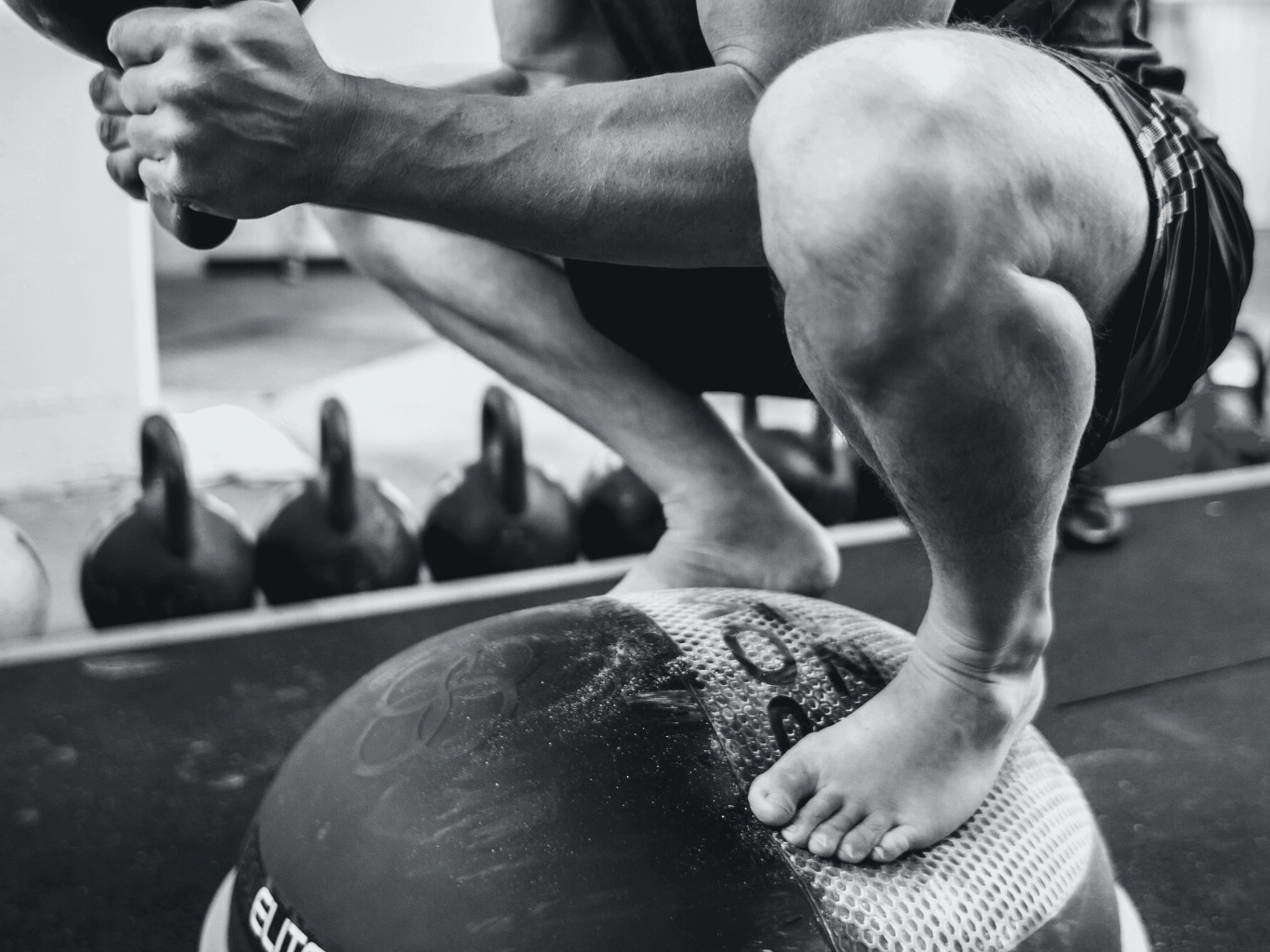
Use the unique dome geometry to connect ground reaction force, centerline, coiling pressure, and strength training.
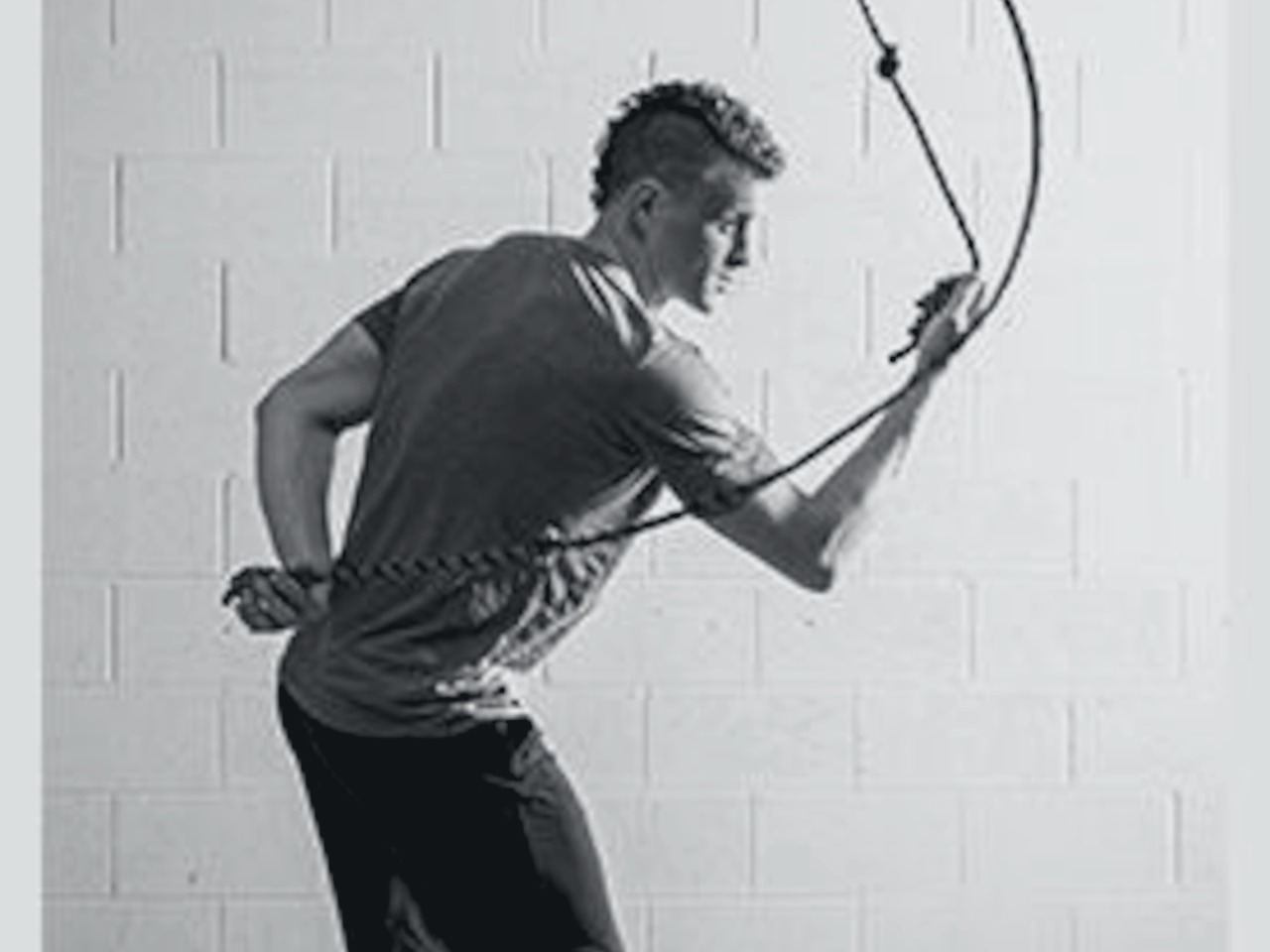
Make figure-eight rhythm visible and develop coordination between left and right coils in walking, running, and throwing.
Translate WMQ principles into your own practice according to the athlete, client, discipline, and environment.
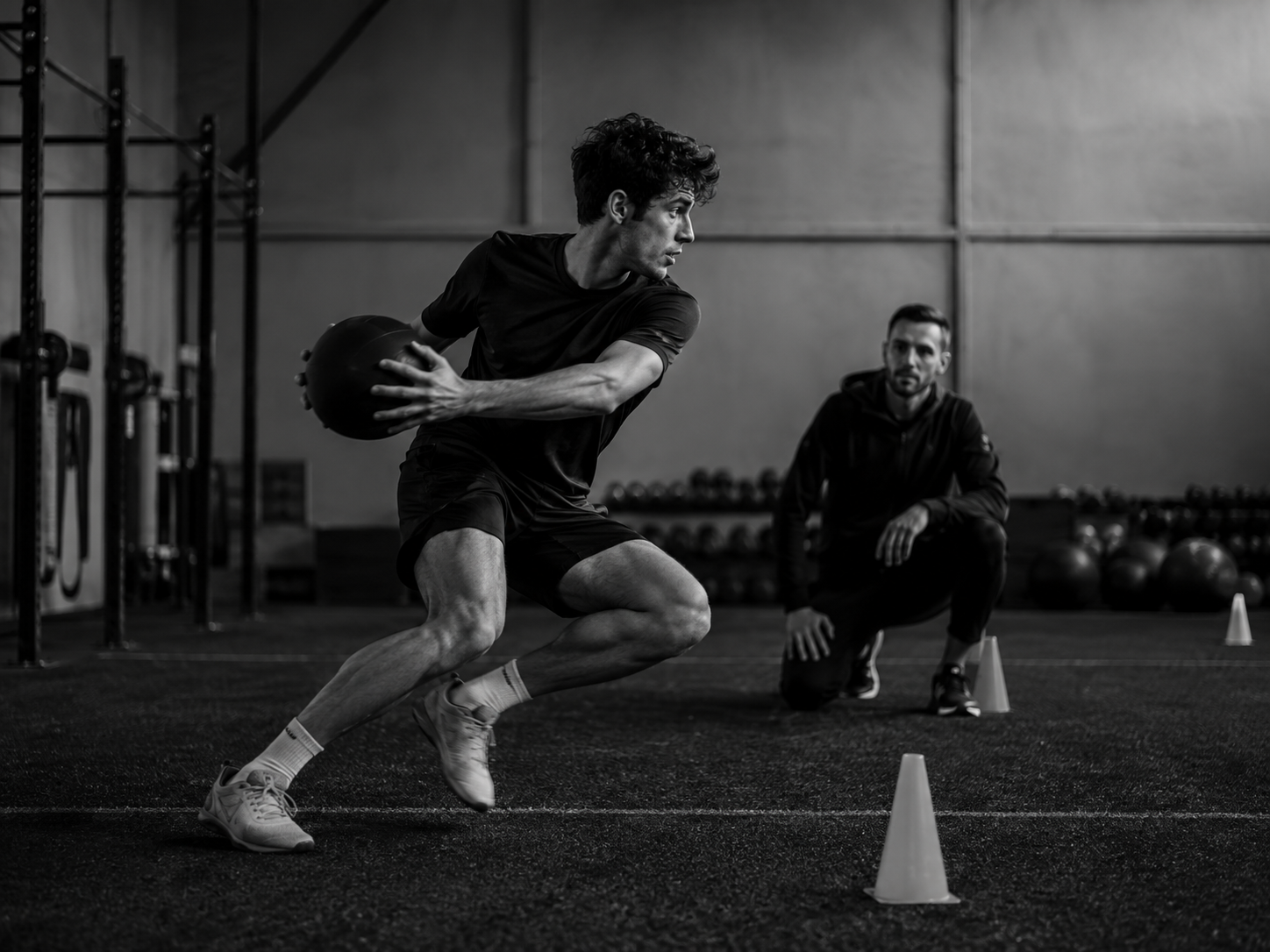
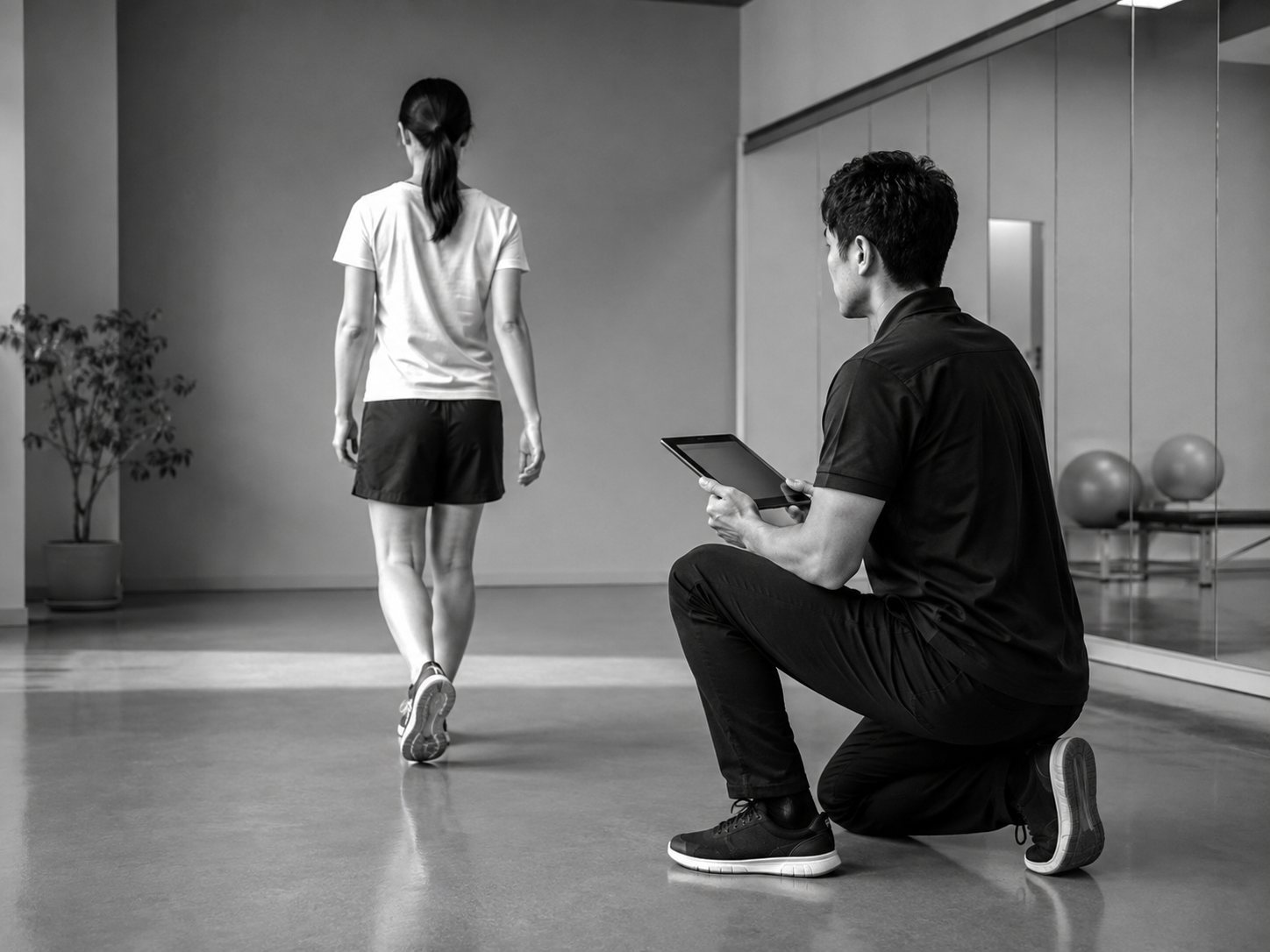
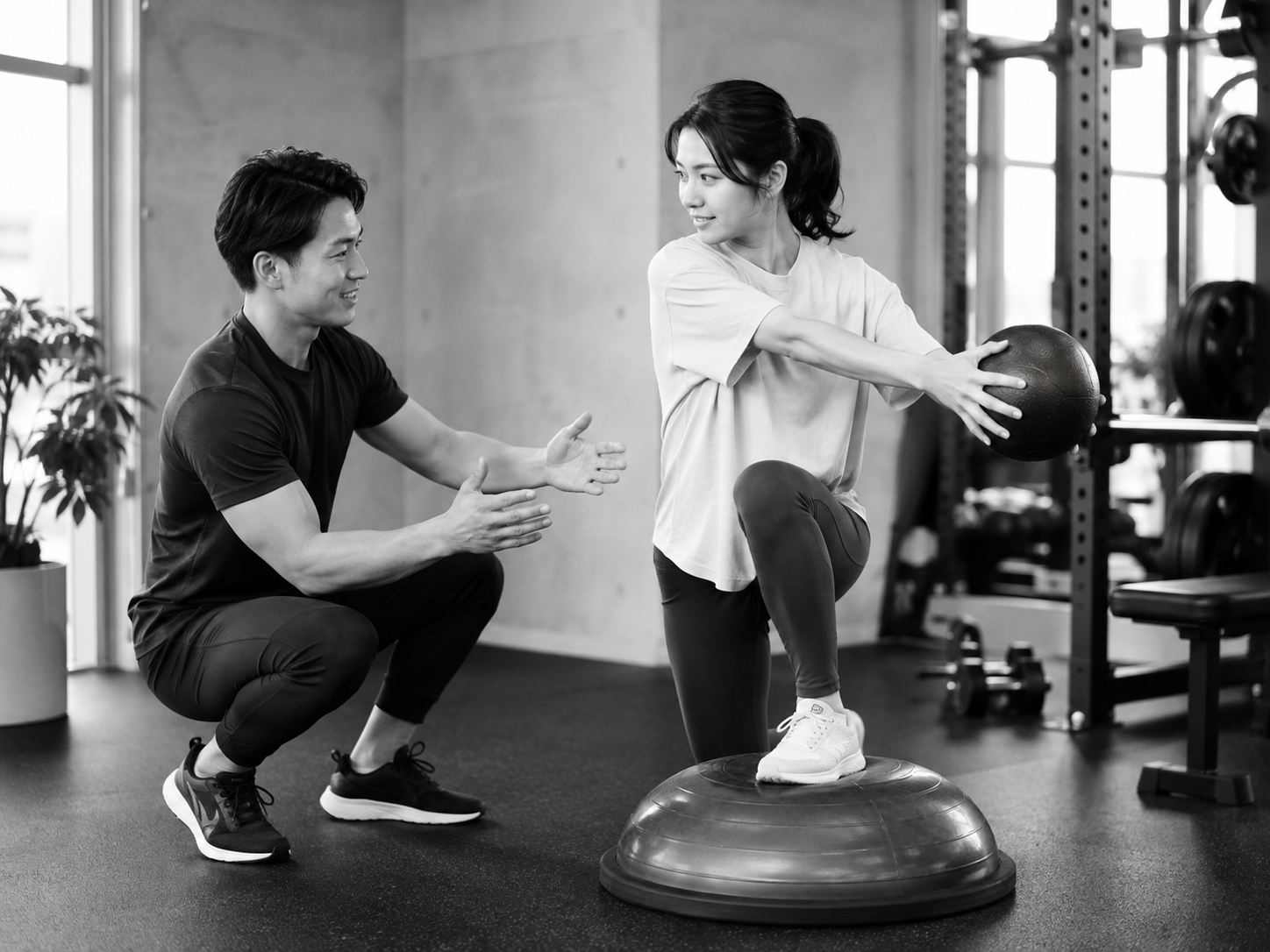
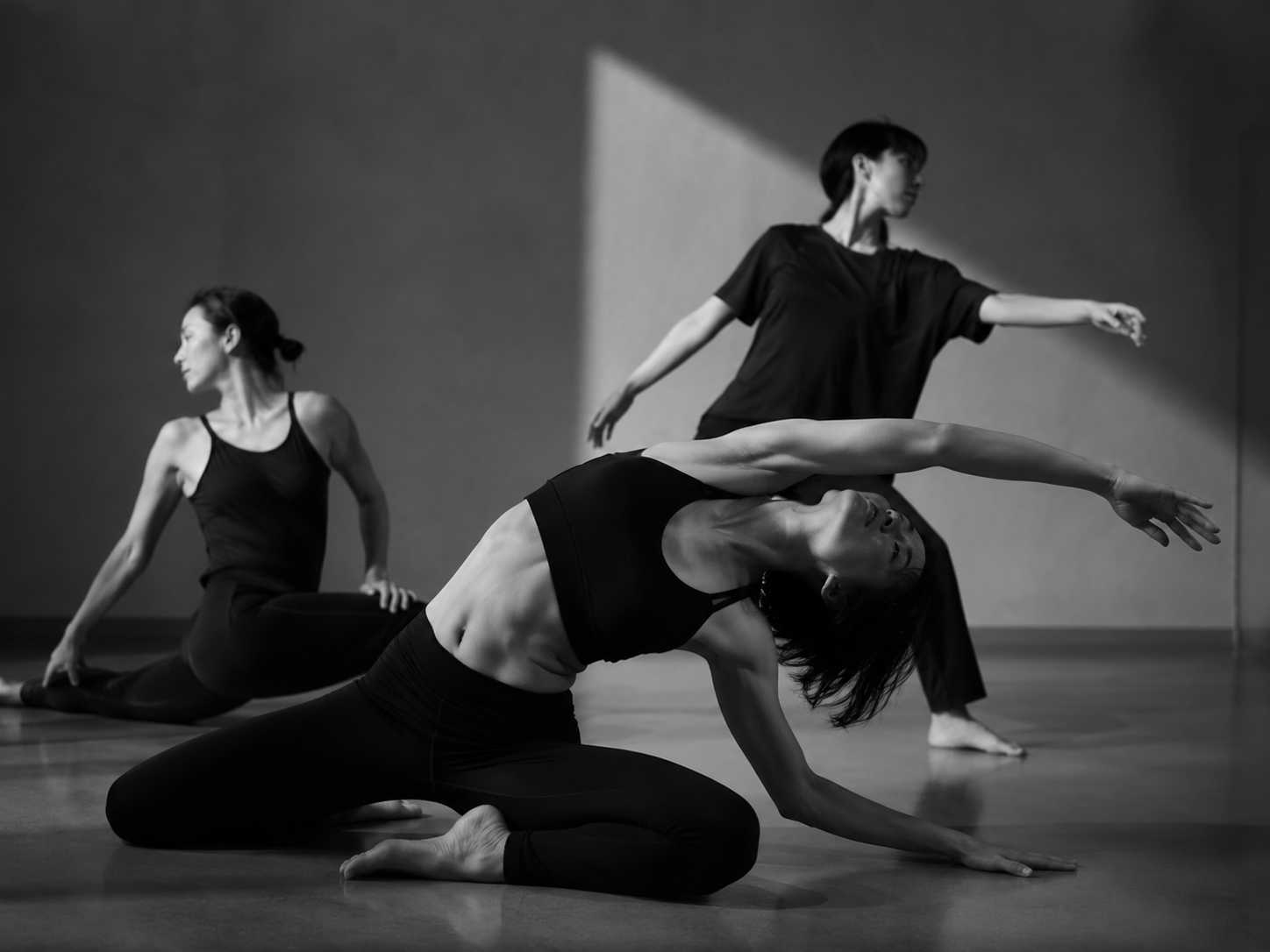
RMTS establishes the shared language and foundational structure of rotational movement. WMQ advances that foundation into multidirectional coordination, muscular torsion, loading, tools, coaching, and programming. Athletes and performers also gain a framework for reassessing their own movement foundations and improving the quality of training and expression.
Prerequisite: WMQ is open to RMTS graduates and participants scheduled to complete RMTS before the WMQ course date.
Build the foundations of rotational literacy through CCT, RMT, BTT, landmarks, RopeFlow, ProPulse®, and bands.
Deepen 3D transitions, torsion maps, RMT® Club, BOSU® Elite, S&C integration, coaching, and program design.
Participants who demonstrate advanced practice and coaching ability may have opportunities to progress toward the Master Coach pathway and RMTS education.
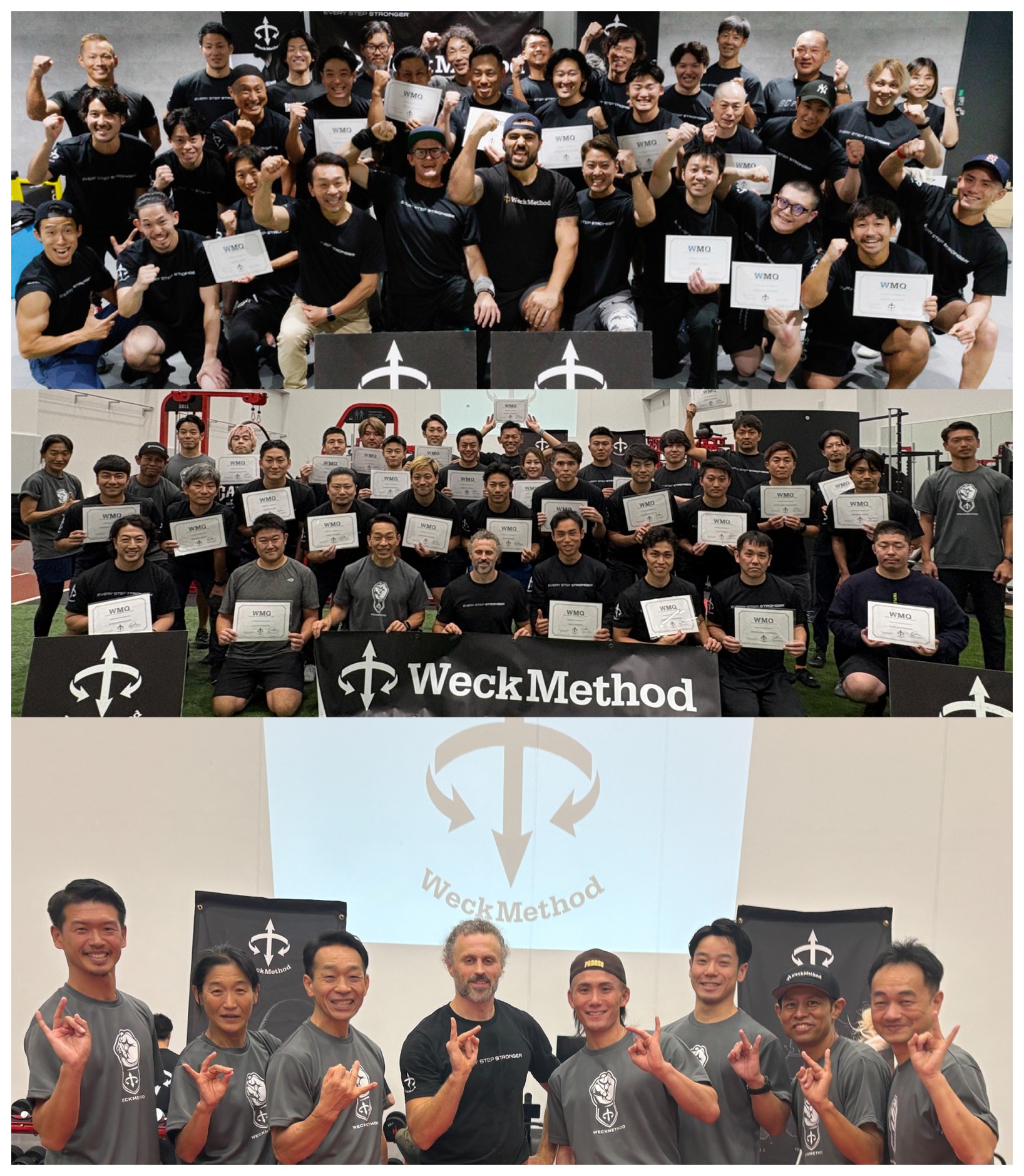
WMQ extends beyond individual skill acquisition. Professionals from different disciplines observe one another through a shared biomechanical language and exchange practice, perspective, and feedback.
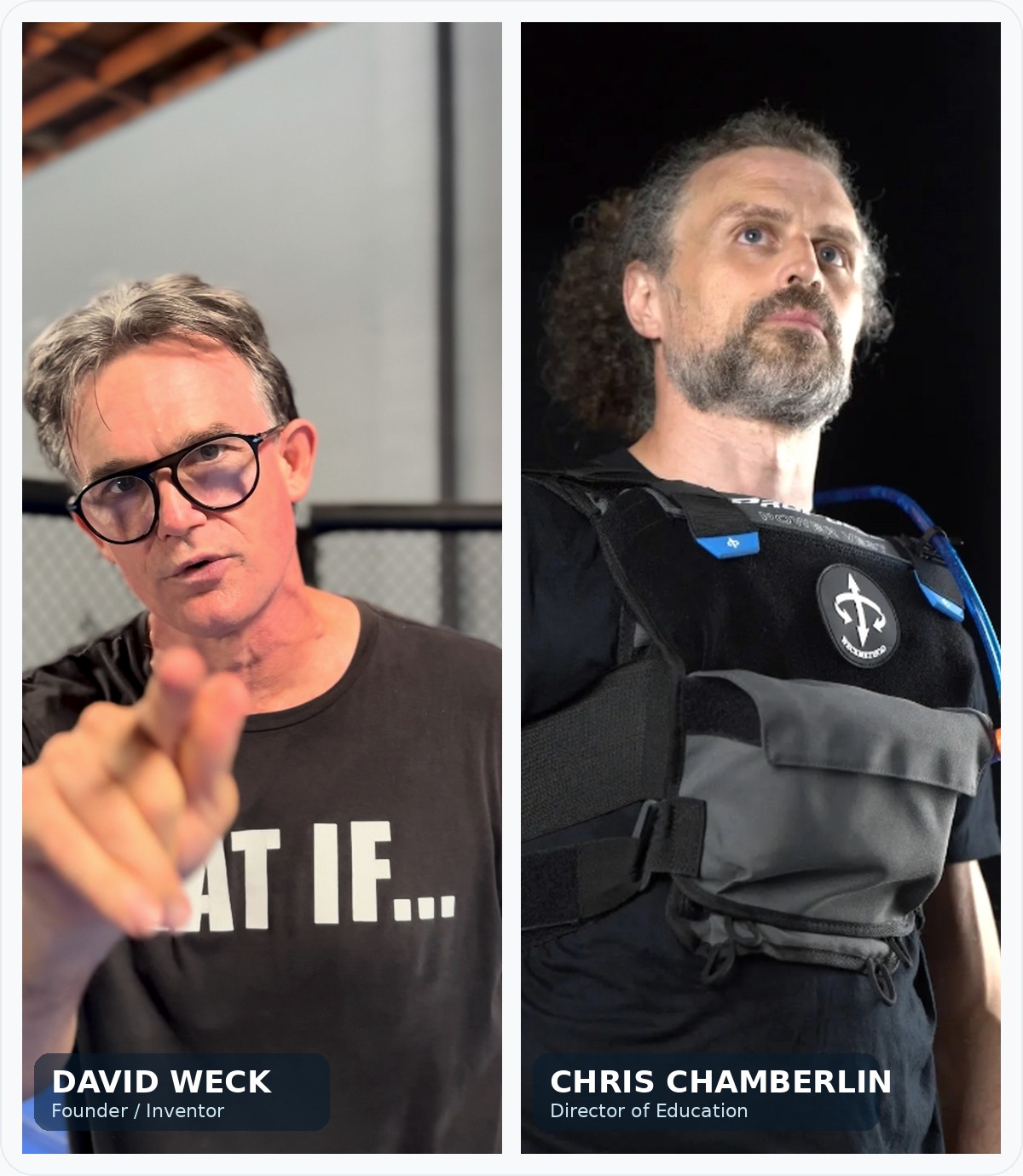
Inventor of the BOSU® Balance Trainer and founder of WeckMethod. Through biomechanics, original problem-solving, and practical tool development, he pursues the principle of “Every Step Stronger.”
WeckMethod Head Coach and Director of Education. He designs practical learning that meets participants where they are and connects lived experience with biomechanics.
Yes. WMQ is not a technical clinic for one sport. It is a coaching system for gravity, ground reaction force, the spine, torsion, and limb integration. Its principles can be translated into fitness, conditioning, Pilates, yoga, dance, and movement instruction around healthcare and rehabilitation.
RMTS completion is required. RMTS establishes shared language and foundational positions through CCT, RMT, BTT, and related concepts. WMQ develops that foundation into higher-level loading, three-dimensional transitions, coaching, and programming.
Participants come from many professional backgrounds. What matters is a willingness to explore movement, practice through your own body, and support other people’s learning. Loads and tools are adjusted to purpose and ability.
WMQ does not replace your existing expertise. It adds rotational biomechanics for observing, organizing, and coaching movement, and can be integrated selectively into your current programs.
Become a coach who can derive the right movement from first principles—even when the sport, age, and experience of the person in front of you change. Integrate the language of rotation into your expertise through WMQ.
View Upcoming WMQ Courses →